

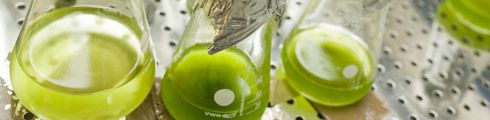

The Systems Biotechnology research group investigates how microbial physiology, metabolism, and environmental conditions interact to determine the performance of microbial production systems. We combine quantitative physiology, metabolic and genome engineering, adaptive laboratory evolution, and bioprocess development to understand and engineer microorganisms for robust and efficient bioproduction.

Previous and Current Research
Microorganisms possess an enormous metabolic diversity that can be harnessed for the sustainable production of chemicals and materials. However, successful biotechnological production requires more than introducing a biosynthetic pathway. Cellular metabolism, regulation, substrate utilization, product toxicity, and the dynamic conditions encountered during cultivation jointly determine whether an engineered strain performs under process-relevant conditions.
Our research therefore connects strain and process development. We use quantitative physiological characterization and systems-level data to identify metabolic and regulatory constraints and translate this knowledge into targeted strain engineering. Rational metabolic and genome engineering is complemented by adaptive laboratory evolution to exploit cellular adaptation and uncover engineering targets that are difficult to predict a priori.
A particular focus lies on metabolically versatile and non-conventional production organisms, including Pseudomonas and Aureobasidium species. We develop these organisms for the conversion of renewable and alternative feedstocks into value-added products, including biosurfactants, specialty lipids, biopolymers, and chemical building blocks. Bioreactor experiments and advanced cultivation technologies are used to quantitatively characterize engineered strains and to evaluate their robustness under process-relevant conditions.
Future Projects and Aims
Our long-term goal is to establish predictive strategies for microbial cell factory development that integrate molecular engineering with quantitative microbial physiology and bioprocess conditions. We aim to understand how metabolic networks respond and adapt to changing environments and how this knowledge can be used to construct robust production strains.
A particular focus will be the development of microbial production platforms for a circular bioeconomy. This includes expanding the substrate spectrum towards renewable carbon sources and side streams, engineering novel biosynthetic capabilities, and developing efficient processes for sustainable production of chemicals and functional materials.