



Carbon concentrating mechanisms enhance the carboxylase efficiency of the central photosynthetic enzyme Rubisco by providing supra-atmospheric concentrations of CO2 in its surroundings. In the C4 photosynthesis pathway, this is achieved by considerable changes to the leaf biochemistry and anatomy. Carbon concentration by the photorespiratory glycine shuttle requires fewer 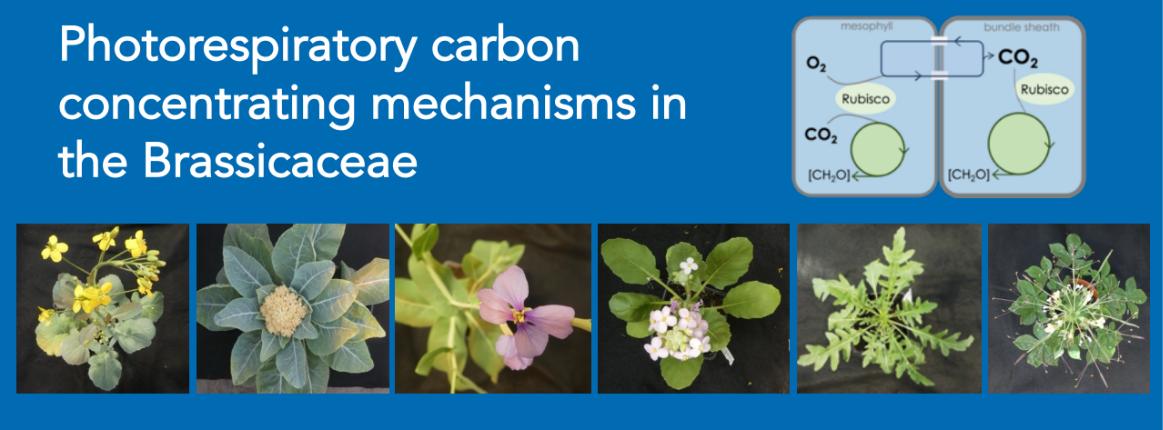 and less complex modifications and could represent an early step during evolution from C3 to C4 photosynthesis.
Physiology, biochemistry and anatomy were studied in a large variety of Brassicaceae species representing several independent origins of carbon concentrating mechanisms. Gradual reduction in the CO2 compensation points indicated considerable variation in the efficiency of the carbon concentrating pathway of the different plant species. The glycine shuttle was generally connected to centripetal organelle accumulation in the bundle sheath. Leaf biochemistry was only mildly affected by the photorespiratory shuttle, but the C4 shuttle caused characteristic changes in the metabolite pattern.
Establishment of the photorespiratory shuttle depends on mesophyll and bundle sheath-specific structure and biochemistry. For the C3-C4 intermediate Moricandia arvensis, snRNA sequencing analysis revealed a shift in expression of genes directly associated with photorespiratory reactions, including several components of the glycine decarboxylase complex (GDC), but also the glutamate:glyoxylate aminotransferase (GGT) and the glycolate oxidase (GOX) and ammonium-assimilating enzymes. This suggests a shuttle of several photorespiratory metabolites to the bundles sheath and efficient N recycling in this species.