



Today, maize is the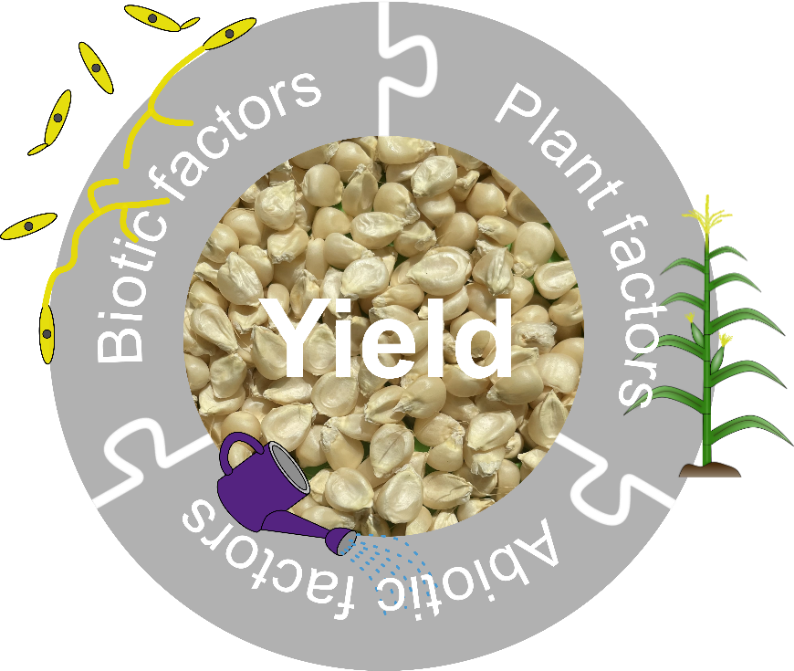 world's most cultivated staple crop, as well as a source of renewable energy and industrial uses. Between 1980 and 2008, maize yields decreased by 3.8%, and a further decline of 10-22% is projected by 2100. Yield depends on various factors that can be loosely categorized as abiotic, biotic, or plant factors. My lab uses methods tailored specifically to maize,such as transformation and CRISPR/Cas9-mediated mutation, to study fundamental molecular mechanisms in plant development, pathogen interactions, and responses to environmental changes. This includes projects on the impact of climate change on corn smut disease and the discovery of new resistance factors, as well as the identification and characterization of a novel plant peptide that regulates plant growth and development in land plants and algae, which makes it an excellent target for biotechnology approaches.
2026-03-23 | CeBiTec-Colloquium: PD Dr. Karina van der Linde, Plant Cell Biology, Biochemistry, and Biotechnology, University of Regensburg
CeBiTec – Colloquium
Monday, March 23, 2026, 17:00 CET c.t. (17:15)
G2-104, CeBiTec Building
PD Dr. Karina van der Linde
Plant Cell Biology, Biochemistry, and Biotechnology, University of Regensburg
A hot mess? Climate change, corn smut and maize development